19 Simple & Pretty Air Dry Clay Crafts to Make at Home
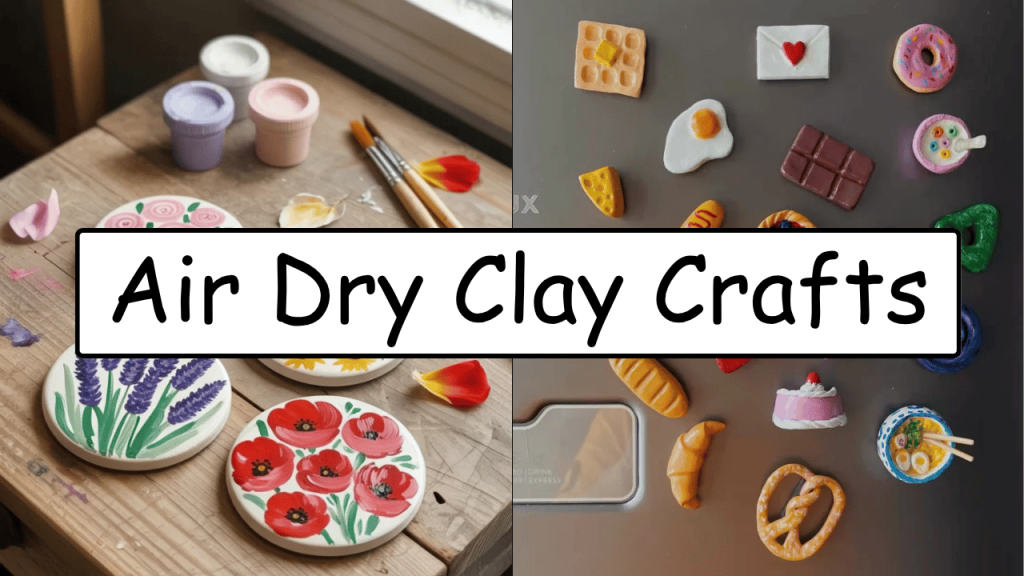
If you’ve never worked with air-dry clay before, you’re missing out on one of the most satisfying craft supplies available right now. There’s no kiln, no pottery wheel, no special equipment, no class you need to take first. You open the packet, start shaping and see what happens.
That accessibility is why air-dry clay has become so popular with a wide range of people. Kids love it because it’s hands-on. Adults love it because the results look impressive without requiring heavy skills. And pretty much everyone appreciates that a pack of clay costs very little and can become a whole collection of useful and beautiful things.
Once your piece dries, you can paint it, decorate it, seal it or leave it plain for that natural, handmade look that’s everywhere in home decor right now. The options are wider than most people realize when they first pick up a pack.
Here are 19 air-dry clay projects worth trying, from useful everyday items to decorative pieces that look like you spent a lot more time and money on them than you actually did.
1. Clay Ring Dish
Ring dishes are probably the most popular air-dry clay project going and once you make one, you’ll understand why. They’re simple, quick, useful and look lovely sitting on a dresser or nightstand. They also make one of the best handmade gifts because pretty much everyone has jewelry that needs somewhere to live.
Roll out a small piece of clay and shape it into a shallow bowl. If freehand shaping feels uncertain, press the clay into a small bowl from your kitchen to use as a mold and it’ll come out with a consistent shape every time. Let it dry completely, then paint it however you like. Metallic gold or rose gold paint gives a finished ring dish an expensive-looking quality that’s disproportionate to the effort involved.
2. Clay Plant Markers
If you grow anything, herbs on a windowsill, vegetables in a garden bed, flowers in pots, clay plant markers are a lovely, practical project that also looks beautiful in a way that generic plastic labels never do.
Roll the clay flat and cut it into small tag shapes, leaving a longer stem at the bottom to push into the soil. Before the clay dries, use a toothpick or the end of a pencil to press the plant name into the surface. Keep the letters deep and clear. Once dry, you can paint over the lettering in a contrasting colour to make it easy to read or leave it natural for a more minimal look.
They make a thoughtful gift for gardening friends and they hold up surprisingly well outdoors if you seal them properly before use.
3. Decorative Clay Coasters
Homemade coasters are one of those projects that sit in the sweet spot between practical and decorative, and clay ones have a handmade quality that cork or fabric versions just don’t have. They also look lovely on a coffee table in a way that makes people ask where you bought them.
Roll the clay out to an even thickness and cut your shapes using cookie cutters or a knife. Circles, squares and hexagons all work well. Here’s the part that makes these really special, though: before the clay dries, press leaves, lace, textured fabric, or decorative stamps into the surface to create an impression. The pattern left behind looks intricate and intentional and takes almost no extra effort.
Once fully dry, seal them with a waterproof finish so they can actually do their job without absorbing moisture.
4. Clay Jewelry
Air-dry clay jewelry has had a genuine moment in the handmade market over the last few years, and the reason is simple. The clay is lightweight enough to wear comfortably, it takes paint and glaze beautifully and the results look professional and considered even when the technique is quite basic.
Earrings are the most popular clay jewelry project, and for good reason, because small shapes dry quickly, the material cost is minimal, and a pair of handmade clay earrings makes a really lovely gift. Geometric shapes, abstract forms, flowers, tiny faces, little fruits, the design options are endless, and the only limit is your imagination and the size of your hands.
If you’re thinking about selling crafts, clay jewelry is one of the strongest categories to explore because the profit margin is solid and the products photograph beautifully.
5. Mini Clay Succulent Pots
Tiny plant pots made from air-dry clay are almost unreasonably cute, and they’re also functional, which makes them one of the most satisfying projects on this list. Shape the clay into a small container with enough depth and wall thickness to actually hold soil and a plant without cracking.
The key with these is making sure the walls are thick enough to be sturdy once dry. Very thin clay walls tend to crack as the clay shrinks during drying, so work slightly thicker than you think you need to.
Once dry, paint them in whatever colours or patterns appeal to you. Plain terracotta-effect paint looks elegant. Bold geometric patterns look modern and fun. Pop a mini succulent in, place it on a desk or windowsill and enjoy the fact that you made that.
6. Clay Candle Holders
Handmade candle holders are a home decor project that looks considerably more complex than it actually is, and the finished piece adds a warm and personal quality to a room that shop-bought holders don’t quite manage.
Shape the clay into a holder that fits a tea light or a small pillar candle. Keep the walls thick and sturdy because this is one project where you really don’t want them to be too delicate. Press patterns or textures into the surface before it dries if you want something more decorative, or keep it smooth and simple for a clean, minimalist look.
The glow that comes through a clay holder when a candle is lit inside is really beautiful, and it makes these one of the most photogenic things on this list.
7. Clay Magnets
Clay magnets are one of the best projects to make with kids because they’re quick, the results are immediately satisfying and they actually end up somewhere useful afterward rather than sitting in a drawer. They’re also a great starter project for adults who are new to clay and want something low-stakes to practice with.
Make small shapes, stars, flowers, fruits, animals, letters, hearts, whatever appeals, and let them dry completely. Paint them in bright, cheerful colours, seal them with varnish, and then glue a small magnet to the back. That’s it.
They look great on a fridge, a locker, or a magnetic board, and they make sweet little gifts that don’t cost much to make but feel personal and handmade in all the right ways.
8. Clay Picture Frame Embellishments
You don’t have to make an entire picture frame from clay to get a beautiful result. Making individual decorative elements and attaching them to a plain wooden frame is actually a more effective approach and gives you a lot more control over the finished look.
Make small flowers, leaves, bows, hearts, tiny stars, or whatever decorative shapes fit the theme you’re going for. Let them dry completely, then paint them and glue them onto the frame in whatever arrangement looks right. You can create something that looks elaborate and detailed without the difficulty of trying to make a whole frame from scratch.
These make beautiful handmade gifts, especially when the photo inside is meaningful.
9. Clay Keychains
Clay keychains are small, quick, and require barely any material, which makes them one of the best projects for using up small leftover pieces of clay. They’re also popular as handmade gifts and craft fair items because they’re affordable, personal and practical.
Roll the clay and cut simple shapes, initials, circles, stars, hearts, paw prints, whatever feels right. The important thing to remember before the clay dries is to make the hole for the keyring. It’s the most commonly forgotten step, and there’s nothing more frustrating than a perfectly finished keychain with no way to attach it to anything.
Once dry, paint them, seal them, and add a keyring. Personalizing them with initials or names makes them significantly more giftable.
10. Clay Trinket Bowls
Trinket bowls might be the most quietly useful thing you can make from air-dry clay. Everyone has small things that need somewhere to live, coins, keys, hair ties, paper clips, earrings, and the random small objects that end up scattered across every surface in a home. A trinket bowl gives those things a home and looks good doing it.
Shape the clay into whatever bowl form appeals to you. Keep the walls a consistent thickness so it dries evenly without cracking. Leave it plain for a minimalist look that works in almost any space or decorate it with painted patterns, geometric designs or simple textures pressed in before drying.
These are consistently popular as handmade gifts because they’re both decorative and immediately useful, which is a combination most people appreciate.
11. Clay Wall Hangings
Clay wall hangings sit in that satisfying intersection of art and craft where the process is enjoyable and the finished result looks like genuine home decor rather than just a craft project. They’ve become really popular in the handmade market and for good reason.
Make individual clay shapes, circles, crescents, leaves, abstract forms, geometric pieces, small moons or whatever aesthetic to which you’re drawn. Make small holes in each piece before the clay dries. Once everything is painted and sealed, connect the pieces using string or twine hung from a small branch or dowel.
The finished hanging looks considered and artistic on a wall and it’s one of those things people assume you either bought from a boutique shop or have significant artistic skill to make. You have neither requirement.
12. Clay Animal Figurines
Animal figurines are one of the most enjoyable clay projects because you get to be creative with shape and character and the results, even imperfect ones, tend to be completely charming. There’s something about a slightly wonky handmade clay turtle that is more appealing than a perfect shop-bought one.
Start with simple shapes. A turtle is just an oval body with four small leg pieces and a domed top. A cat is a spherical body, a smaller spherical head, and two small triangles for ears. Build the basic form first and add details like eyes, texture and patterns once the main shape is solid.
Once painted, these make lovely decorations and gifts. Kids especially love making animal figurines because the creative decisions feel theirs.
13. Clay Napkin Rings
Napkin rings are one of those things that make a table look significantly more put together without requiring much effort, and handmade clay ones have a weight and quality to them that plastic or cardboard versions never achieve.
Roll the clay into a strip and curve it into a ring shape large enough to hold a folded napkin comfortably. Let it dry in the ring shape by supporting it while drying if needed. Before it dries, press leaf shapes, floral patterns, or simple textures into the surface for a decorative effect.
These are especially popular around the holidays when people want their tables to look special, and they make a really thoughtful, handmade gift for anyone who loves hosting.
14. Clay Christmas Ornaments
Handmade Christmas ornaments are one of those things that tend to become treasured over time. Unlike most decorations that get swapped out as trends change, handmade ones often stay on the tree for years and sometimes decades because they have a personal quality that mass-produced ornaments just don’t have.
Use cookie cutters to cut stars, snowflakes, trees, angels, hearts and other festive shapes from rolled clay. Make a hole at the top with a skewer or toothpick before they dry. Once completely dry, paint and decorate them however you like. Glitter, metallic paint, simple patterns, tiny hand-lettered names or dates.
Thread ribbon through the hole, and you have a handmade ornament that might end up on someone’s tree for the next twenty years.
15. Clay Leaf Impressions
Clay leaf impressions are one of those projects where nature does most of the design work for you and the results look beautiful with almost no artistic skill required.
Go outside and collect leaves with interesting shapes and well-defined veins. Roll out a piece of clay to an even thickness and press a leaf firmly into the surface, vein side down. Press firmly and evenly across the whole surface. Then carefully peel the leaf away. What’s left is a perfect impression of every vein and edge.
Cut around the impression or leave the clay as a flat tile. These can become wall decor, decorative dishes, ornaments or coasters and the natural pattern looks intentional and considered, even though it took about thirty seconds to create.
16. Clay Pencil Holders
A handmade pencil holder is one of those projects that is both useful and enjoyable to make, which is a combination that makes it worth doing. It also sits on your desk as a reminder that you made something with your hands. That is a quietly satisfying feeling.
Shape the clay into a cylinder or square container with walls thick enough to be sturdy. Make it tall enough to actually hold pens and pencils upright without them falling over. Press patterns into the surface before drying or leave it smooth and paint it once dry in colours that match your workspace.
These make really good gifts for students, teachers, artists, and anyone who works at a desk, which is a fairly wide audience.
17. Clay Beads
Making your own beads is one of those craft activities that sounds simple and is simple, but produces results that are impressive when you see the finished jewelry made from them. The ability to customize the size, shape, colour, and finish of every single bead is something you simply cannot get from shop-bought alternatives.
Roll small amounts of clay into whatever shapes you want. Spheres, tubes, irregular organic forms, tiny flat discs. The only essential step is creating a hole through the center of each bead before the clay dries. A skewer or a thick needle works perfectly for this.
Once painted and sealed, the beads can be strung into necklaces, bracelets, keychains, or used in other craft projects. Mixed colour bead collections made from scrap clay are some of the most visually interesting.
18. Clay Incense Holders
Incense holders are a simple, functional project that also happens to look really elegant when it’s done well. The aesthetic lends itself naturally to minimalist decoration, which makes these appealing to a wide range of people.
Shape a flat base that’s wide and sturdy enough not to tip over. Create a small angled hole that will hold an incense stick at a slight angle, deep enough to keep it secure during use. Decorate the surface with moons, stars, simple floral patterns, or leave it completely plain for a clean, minimal look.
These are particularly popular in meditation spaces, bedrooms, and home office setups, and they make a thoughtful and slightly unexpected handmade gift that most people love receiving.
19. Clay Decorative Mushrooms
Decorative mushrooms have become popular in home decor over the last few years, particularly in cottagecore and woodland-inspired aesthetics, and clay ones have a solidity and charm that ceramic shop-bought versions don’t always manage.
Make the cap and stem as separate pieces and attach them together while both are still slightly soft, so they bond properly as they dry. Make several in different sizes and with slightly different proportions because a collection of mushrooms always looks better than a single one, and the variation gives the group character.
Once painted, these look beautiful on shelves, plant stands, in fairy gardens, in terrariums, or grouped together as a seasonal display. The classic red cap with white spots is always popular, but pale spotted varieties, brown forest mushrooms, and tiny toadstools all have their own appeal depending on the space they’re going into.
A Few Tips Before You Start
Air-dry clay is forgiving and beginner-friendly, but a few small things make a real difference to how your projects turn out.
Keep any clay you’re not actively using sealed in an airtight bag or container because it dries out faster than you’d expect once it’s exposed to air. Keep a small bowl of water nearby while you work and use your fingertip to smooth any cracks or rough spots as you go. Working on a smooth non-stick surface makes shaping easier and releasing your finished piece simpler.
Allow everything to dry completely before painting. Larger pieces can take several days, and it’s worth the patience because paint applied to clay that isn’t fully dry can crack and peel. Once painted, a coat of clear sealer protects the surface and makes your finished piece last significantly longer.
Final Thoughts
Air-dry clay is one of those craft supplies that earns its place in a supply collection because the range of things you can make with it is so wide. Ring dishes, plant markers, coasters, jewelry, candle holders, ornaments, wall hangings, beads, tiny pots, decorative mushrooms, useful everyday objects, and beautiful decorative pieces all come from the same simple material.
It’s beginner-friendly enough that you can pick up a pack today and have something finished and painted by the end of the week. It’s also satisfying enough at every skill level that experienced crafters keep coming back to it because there’s always something new to try.
Pick whichever project caught your eye first on this list, grab a pack of clay, and just start. The first thing you make won’t be perfect, and that’s completely fine because the second thing will be better and the third thing better still. That’s how clay works, and honestly, it’s one of the most enjoyable parts of the whole process.