19 Fun Nature Craft Ideas You Can Try
There’s something about making something beautiful out of things you literally just found on the ground that hits different from any other kind of craft. No shopping list, no waiting on a delivery, no spending money on supplies you’ll use once and forget about. Just a walk outside and whatever catches your eye along the way.
That’s what makes nature crafts so good. The materials are either completely free or close enough to it that the cost barely registers. Leaves, pinecones, sticks, rocks, flowers, and acorns—most of it is just sitting there. And what you can actually make with these things ranges from simple afternoon activities with kids to lovely home decorations that people notice and ask about when they visit.
Whether you want something fun for the weekend, a calming solo project, a classroom activity, or just an excuse to spend more time outside, these 19 ideas are worth trying.
1. Painted Rocks
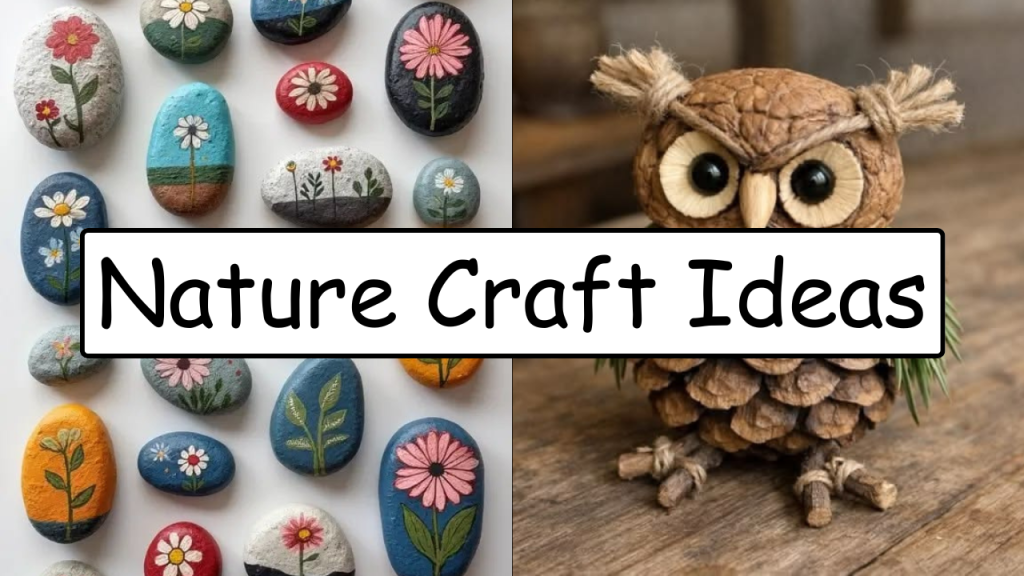
Painted rocks are probably the most popular nature craft going, and once you start, it’s not hard to see why. They’re simple. They cost almost nothing, and they work for every age. Small kids love them, adults find them surprisingly meditative, and the whole process from collecting to painting to finding a spot to display the finished rock is satisfying in a way that’s hard to explain until you’ve done it.
Collect smooth rocks from your yard or garden; the flatter and smoother, the better for painting. Wash them properly and let them dry before you pick up a brush. Then use acrylic paint and go for it. Flowers, animals, ladybugs, words, abstract patterns, funny faces, whatever you feel like making that day. Finished rocks work as garden decorations, paperweights, gifts, or just little unexpected pops of color sitting around the house.
2. Leaf Printing Art
Leaf printing sounds simple to be worth doing, but the results consistently surprise people. There’s a moment when you lift the leaf away from the paper and see the perfect impression of every vein and edge left behind, and it feels satisfying every single time.
It’s also quietly educational for kids because they start paying attention to the differences between leaves they never bothered to before. Go outside and gather a good variety of shapes and sizes; the more interesting the better. Brush paint onto one side, press it firmly onto paper or cardstock, and lift carefully.
Every print comes out slightly different. It makes the whole collection feel unique and worth keeping. Frame a set of them and you have wall art. Turn individual prints into greeting cards. Or just spend an afternoon making as many as you can and see what you end up with.
3. Pinecone Bird Feeders
This one is a craft and a gift to your local birds at the same time, which is a good use of an afternoon. It’s also one of the best things to make with young kids because the payoff, watching actual birds show up and use the feeder they made, usually happens quickly and is very exciting.
Spread peanut butter or sunflower butter generously over a pinecone, getting it into all the gaps. Roll it in birdseed until the whole surface is covered. Tie string around the top and hang it from a tree branch outside.
Then you wait and watch. Kids who made the feeder themselves become very interested in figuring out which birds are visiting, and that curiosity is honestly one of the nicest side effects of a simple craft afternoon.
4. Twig Picture Frames
Instead of buying a frame, go outside and collect the materials to make one. It takes about twenty minutes, and the finished result has a handmade rustic quality that no shop-bought frame can replicate because each one is slightly different depending on the sticks you found.
Collect sticks and twigs that are reasonably sturdy and roughly similar in size. Either glue them around a plain frame you already have or build the whole thing from scratch using cardboard as a base, with twigs glued around an opening sized to fit your photo.
The finished frame looks lovely in rooms that lean toward a natural or farmhouse aesthetic, and it makes a really thoughtful gift, especially when the photo inside is a shared memory between you and the person you’re giving it to.
5. Pressed Flower Bookmarks
Pressed flower bookmarks are one of those crafts that look like considerably more effort went into them than it actually did. They’re delicate and pretty, and people love receiving them, which makes them one of the best things one can make as gifts for teachers, grandparents, or friends.
Collect flowers, smaller and flatter ones press better, and place them between the pages of heavy books. Leave them for several days until they’re completely flat and dry. Then arrange them on strips of cardstock and cover with clear contact paper or get them laminated.
What you end up with is a bookmark that’s beautiful and practical and that contains a real preserved flower. That last part is what makes people keep them rather than lose them in a drawer somewhere.
6. Nature Collages
Nature collages are wonderfully open-ended in a way that most crafts aren’t. There are no rules, no wrong answers, and no specific outcome you’re supposed to be working toward. You collect whatever looks interesting outside and then arrange it into something on paper, and that’s the whole brief.
Leaves, flower petals, grass, bark, seeds, small twigs—anything goes. Glue it all onto paper or cardboard and make whatever feels right. A landscape, an animal, an abstract pattern, a face made entirely out of leaves. Kids thrive with this one specifically because the lack of structure gives their imagination proper room to move.
It’s also one of the most tactile crafts on this list, which makes it especially good for younger children who are still learning through touching, handling, and exploring with their hands.
7. Acorn Necklaces
Most people walk straight past acorns without a second thought, but they’re actually perfect little natural pendants just waiting to be turned into something. This project works well for older kids and adults, and the finished pieces have a quiet charm that feels intentional rather than accidental.
Carefully attach a small eye hook to the top of an acorn or drill a tiny hole through it if you have the right tools. Thread string, twine, or thin ribbon through, and you have a necklace. Leave it natural for a simple woodland look, or paint it with metallic paint, add small beads alongside it, or seal it with varnish to help it last.
It’s a small project but a satisfying one and one of those things that looks better in person than it sounds on paper.
8. Leaf Garlands
Leaf garlands are one of the simplest and most effective ways to bring autumn indoors, and they cost absolutely nothing if there are trees anywhere near where you live. A string of real leaves draped across a mantel or doorway has a warmth to it that artificial garlands just don’t manage to capture.
Collect colorful leaves, ideally ones that have already fallen and are starting to dry on their own. Let them dry a little more if needed, then either punch small holes and thread them onto string or twine or glue them on in overlapping layers until you have a length with which you’re happy.
Hang it across a fireplace mantel, along a shelf, in a doorway, or across a window. It looks beautiful and costs you nothing except the time it took to make it, which in this case is not very much at all.
9. Stick Stars
Stick stars are one of those satisfying crafts where the effort involved and the quality of the finished result are completely out of proportion with each other in the best way. Five sticks, some twine or hot glue, and about twenty minutes, and you end up with something that looks like it came from a carefully put together home decor shop.
Collect five sticks of roughly the same length and arrange them into a star shape crossing over each other at even intervals. Secure each intersection with hot glue or string wrapped tightly and tied off. Leave them natural or add paint, ribbon, dried flowers, or glitter depending on what you’re going for.
They work as wall decor, wreath centerpieces, or hanging ornaments, and the natural version looks good pretty much any time of year.
10. Flower Crowns
Flower crowns have been around forever, and they’re one of those crafts that never gets old because there’s something about wearing flowers on your head that makes everyone feel a bit more festive and free regardless of how old they are.
Use fresh flowers with flexible stems and weave or tie them together into a circular shape that sits comfortably on your head. If the stems aren’t cooperative enough, floral wire makes a solid base that you can attach flowers to one by one until you have something full and lovely.
Kids wear them for imaginative play and pretend adventures. Adults make them for garden parties, outdoor gatherings, and photos. They don’t last forever, but honestly, that’s part of the appeal. They’re made for the moment, and that makes them feel special.
11. Nature Suncatchers
Nature suncatchers are one of the most visually rewarding crafts on this list because when you hang the finished one in a sunny window and the light comes through it, kids find it magical. And fair enough, it does look pretty magical.
Cut the center out of a paper plate, leaving a sturdy ring around the outside. Stretch clear contact paper, sticky side up, across the opening and fix it to the back of the ring. Collect small, flat, natural materials from outside, leaves, flower petals, blades of grass, tiny flowers, and stick them onto the contact paper however you like. Cover with a second layer of contact paper to seal everything in.
Punch a hole at the top, thread string through, and hang it where the sun hits. The light filters through everything, and it glows.
12. Pinecone Owls
Pinecone animals are a firm favorite with kids, and owls are probably the most satisfying version to make because a pinecone already looks a bit like an owl’s body before you’ve even added anything to it. The shape just works.
Add googly eyes, available at any craft shop or dollar store. Cut small wings from felt or brown paper and tuck or glue them into the sides of the pinecone. Add a small triangle of yellow paper or felt for the beak, and suddenly the whole thing clicks into place and actually looks like an owl.
From there, kids tend to take over completely. They make whole families of forest animals, name them all, and arrange them into scenes. Give them the basic method and then just let them go.
13. Leaf Rubbing Art
Leaf rubbing is the kind of craft that sounds too simple to be worth the effort until you actually try it and realize how oddly satisfying it is. It also gets kids paying attention to leaves; that doesn’t happen when you just ask them to look at one.
Place a leaf under a sheet of thin paper, vein side up, for the best results. Hold it steady and rub the flat side of a crayon over the paper above it. The shape, veins, and texture of the leaf gradually appear on the paper, and kids consistently find that reveal moment exciting even when they know it is coming.
Try lots of different leaves side by side to make something that looks like a nature field guide, or use different crayon colors on the same leaf for a more artistic effect. It needs almost no supplies and keeps kids engaged for longer than you’d expect.
14. Driftwood Decorations
If you live near a beach, lake, or river and you’ve been walking past driftwood your whole life without picking any up, this is your sign to start. Driftwood has this naturally weathered sculptural quality that makes it beautiful before you’ve done a single thing to it. Working with it feels different from working with any other material.
Clean it thoroughly first to get rid of sand, salt, or anything living in the gaps. After that the options are so wide. Wall hangings with shells or beads on twine. Candle holders with small tealights nestled between pieces. Signs with painted lettering. Centerpieces for a coastal or farmhouse-styled table.
The finished pieces have a one-of-a-kind quality that comes from the fact that no two pieces of driftwood are ever the same. That’s something you simply cannot manufacture, and people respond to it.
15. Nature Wreaths
There’s a charm to a wreath made from things you actually found outside that a shop-bought one just doesn’t have. It looks handmade in the best sense of the word, specific and seasonal and connected to the actual world outside your door.
Start with a wire wreath form or a circle of sturdy cardboard. Attach whatever you’ve collected using glue or floral wire. Leaves, pinecones, twigs, dried flowers, berries, seed pods. Layer things up, fill the gaps, and mix textures until it looks full and considered.
The result costs almost nothing and looks like something from a home magazine. Swap out the materials each season, and you have a year-round reason to go outside and forage, which is honestly a lovely habit to have.
16. Stone Garden Markers
Garden markers are practical and pretty at the same time, and that combination is always worth having. If you grow herbs, vegetables, or flowers, you probably know the frustration of forgetting what you planted where once everything is still just a small green shoot. These fix that while also looking pretty nice in the process.
Collect flat stones; the flatter the surface, the easier it is to paint legible lettering. Paint the plant name onto each stone with acrylic paint and seal with a weather-resistant varnish if they’re going to live outside through rain and sun.
They add real personality to a garden, and they’re one of those things visitors notice and comment on, which is always satisfying when you made them yourself from rocks you found for free.
17. Twig Pencil Holders
The transformation from a plain tin can to a styled desk accessory using nothing but sticks and glue is impressive given how little time and effort go into it. It’s one of those before and after moments that makes people ask where you bought it.
Collect small straight twigs and trim them all to roughly the same height, just a little taller than the container you’re covering. Glue them side by side around the outside of an empty tin can or glass jar until the whole surface is hidden underneath.
The finished holder looks great on a desk, craft table, or office shelf, and it makes a really thoughtful handmade gift for teachers or anyone who appreciates that natural rustic aesthetic that’s all sticks and texture and quiet charm.
18. Dried Flower Wall Art
Dried flower wall art is both one of the most beautiful and one of the most straightforward things on this list, which is a rare combination. If you have flowers in your garden or access to wildflowers, this is one of the loveliest ways to hold onto them past the point when they would have wilted and been thrown away.
Hang flowers upside down in small bunches in a dry, airy spot for a week or two or press them flat between the pages of heavy books. Once dry, arrange them inside a picture frame, a shadow box, or glued onto cardstock inside a simple frame.
The finished piece looks beautiful and can last for years if it stays away from direct sunlight and moisture. It’s a meaningful way to preserve flowers from a garden, a special bouquet, or any occasion you want to remember.
19. Nature Mandalas
Nature mandalas are the most meditative thing on this list, and if you’ve never made one, you might be surprised by how completely absorbing the process is. There’s something about arranging natural objects into a circular pattern that quiets whatever noise is going on in your head that’s hard to explain. However, the feeling is very real.
Go outside and collect a variety of materials: leaves, rocks, flowers, pinecones, acorns, sticks, seed pods, or whatever looks interesting. Find a flat surface and start from the center with a single object. Work outward in rings, placing things symmetrically and building the pattern out as you go.
Nothing is glued down, and there’s no permanent result, which is part of what makes it so freeing. Photograph it when you’re happy with it and then leave it for the wind. Kids love making colorful versions with flower petals, and adults often find it becomes a calming habit once they try it for the first time.
A Few Things Worth Knowing Before You Start
Clean your materials before you bring them inside. Wash the rocks, wipe down the sticks, shake out any leaves, and check pinecones for insects. It makes your projects last longer and keeps your workspace from turning into something your mother would not be pleased about.
Collect responsibly. Take things that have already fallen where possible and don’t strip plants or remove large amounts of material from parks or protected areas. Most of the time everything you need is already on the ground just waiting to be picked up.
For younger children stick to the simpler end of this list. Leaf rubbings, painted rocks, and nature collages are the easiest starting points, and they’re engaging enough to hold a young child’s attention without needing tools or complicated steps that require adult supervision throughout.
Final Thoughts
Nature crafts are a good reminder that beautiful things don’t require expensive ingredients. A walk outside with your eyes open is all the supply you need. Leaves, rocks, sticks, flowers, and pinecones can become wall art, jewelry, garden decor, gifts, and hours of enjoyable time for kids and adults alike.
Most of these projects take less than an hour, cost next to nothing, and leave you with something real to show for your time. Some of them also give you a reason to slow down and pay attention to what’s growing and changing outside your door, which in itself is worth something.
Pick whichever one sounds most fun, go outside and gather what you need, and see where it takes you. The best nature craft is always the one you sit down and make.